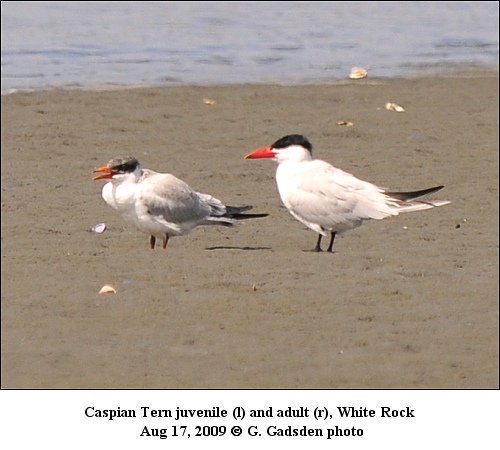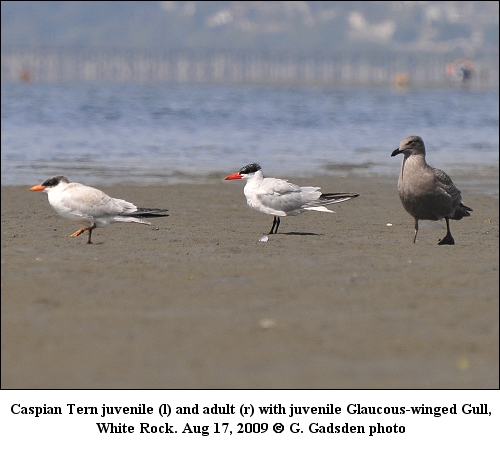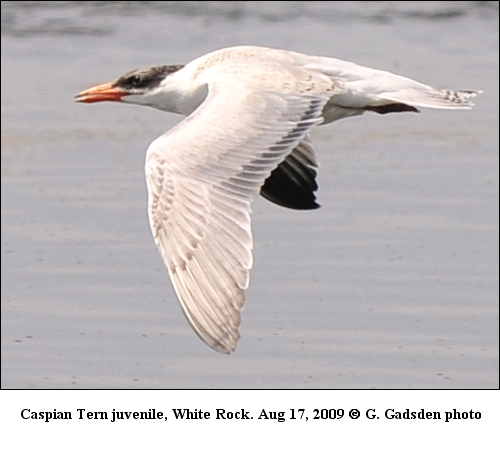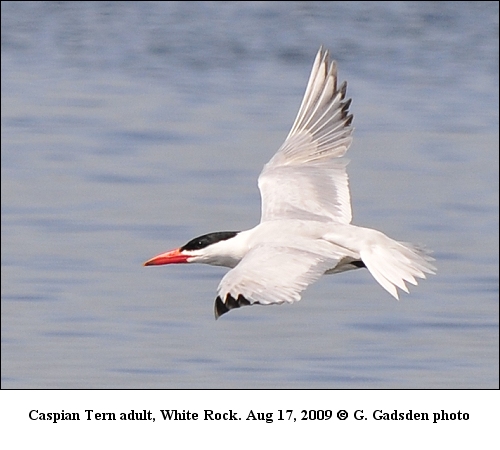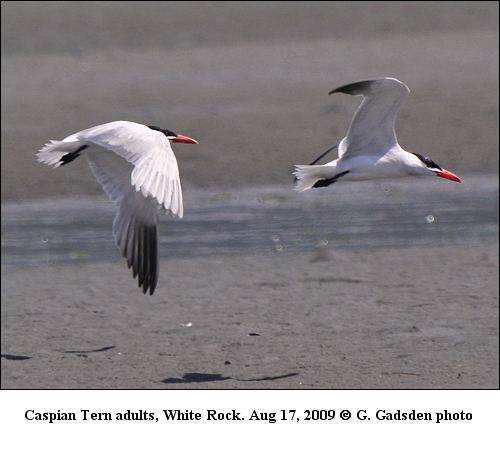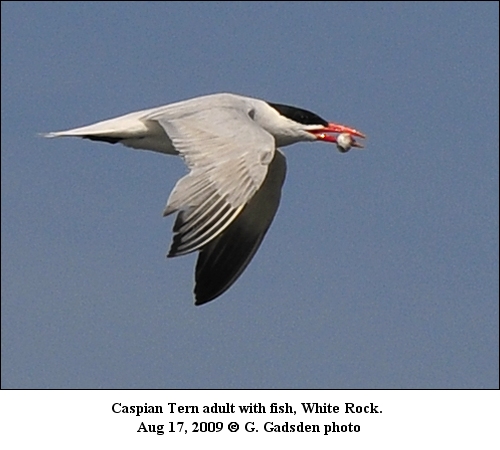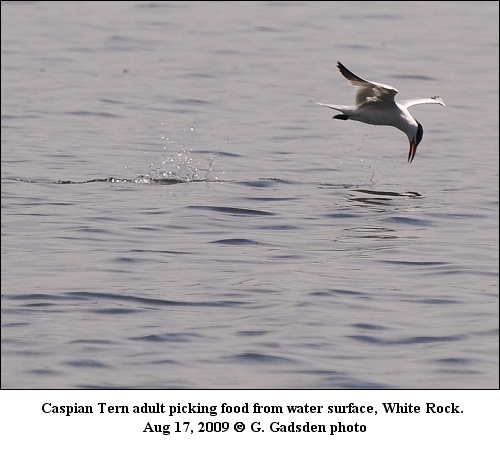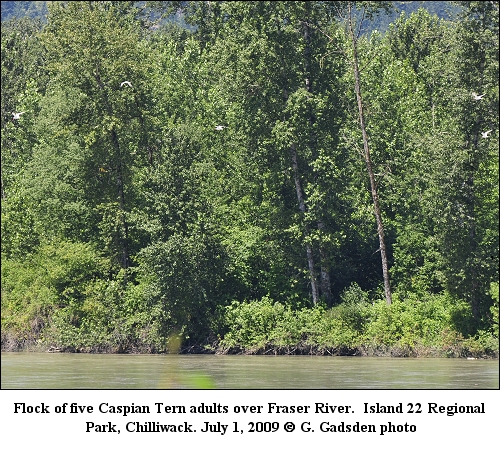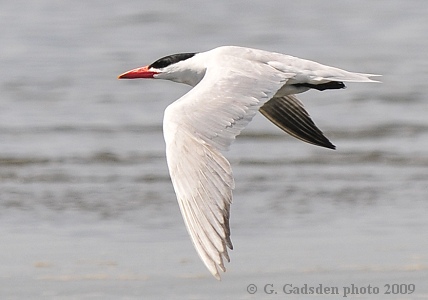

A large and robust tern that is gull-like in some ways. Produces a loud scratchy yelp fairly often. Encountered in our checklist area either over or near the Fraser River where is is seen annually flying back and forth during the summer months. This speices has expanded its population from more southern latitudes on the Pacific Coast. While limited breeding has been detected in BC to date, colonies nest to the south as near as Washington State. Caspian Terns have one of the longest periods of feeding fledged young. Adults will feed their young for 5 - 7 months after the young takes flight. They breed for the first time usually at 4 or 5 years of age.
Similar species:
The large red bill, black cap and pointed wings help differentriate from gulls. Common and ArcticTern have been recorded in the area in the past but are much smaller
Sources:
Ehrlich, Dobkin and Wheye, (1988)
Noteworthy Data
Date | Location | Source(s) | Comments |
| 03-Sept-2010 | Harrison Lake, Harrison Hot Springs | K. R . Jones | Sixteen birds feeding actively and resting on rock breakwater. Highest count on record. |
| 16-April-2010 | Harrison Lake, Harrison Hot Springs | K. R. Jones | Lone bird flying over the lake. Earliest record. |
| 01-July-2009 | Island 22 Regional Park, Chilliwack | G. Gadsden | Five flying downstream over Fraser River. |
| 21-May-2008 | Island 22 Regional Park, Chilliwack | G. Gadsden | Flock of six. |
| 20-May-2006 | Island 22 Regional Park, Chilliwack | G. Gadsden | One flying downstream. |
| 04-June-2006 | Wilband Creek Park, Abbotsford | B. Schmor | At least three flew over. |
| 20-July-1998 | Matsqui Trail Regional Park, Abbotsford | B. Schmor | Five perched on sandbar. |
| 25-Sept-1999 | Fraser River, west Chilliwack | G. Gadsden | Three resting on sandbar during high wind storm. Latest record. |
Photos