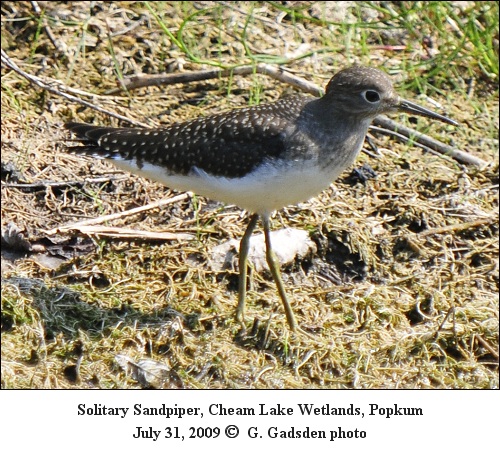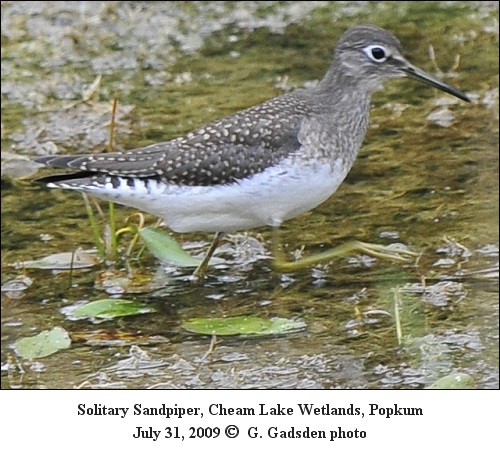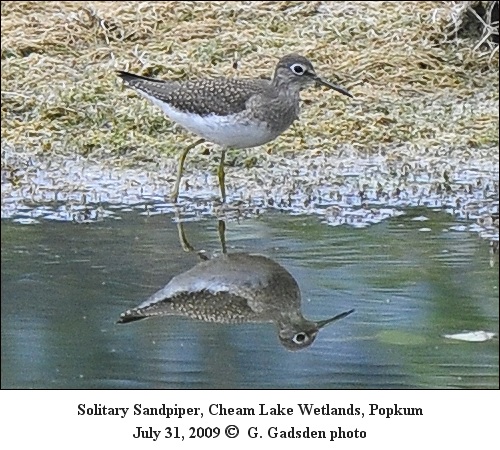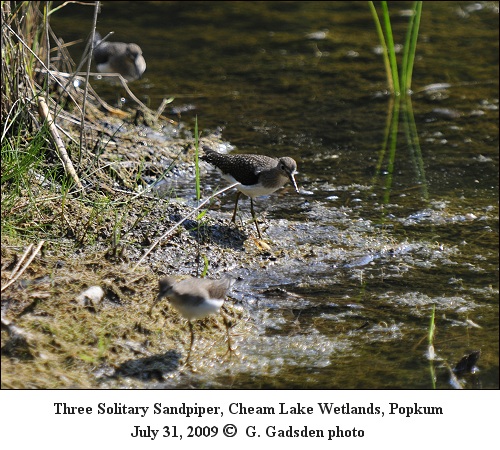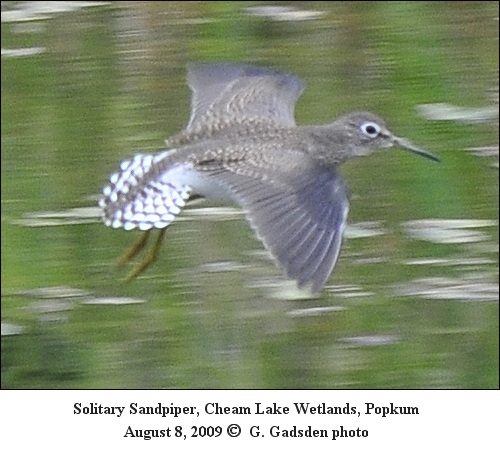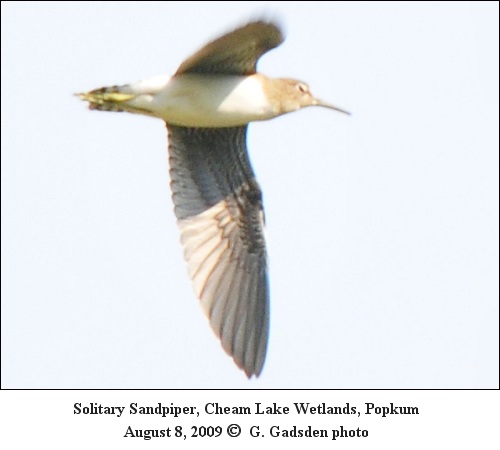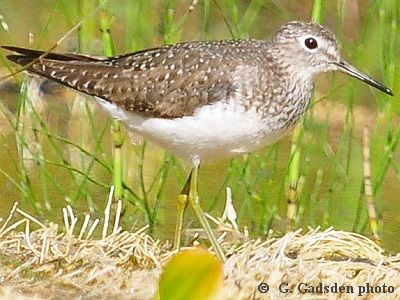

Solitary Sandpipers are usually encountered in the checklist area during fall migration and mainly in the month of August. They breed to the north into Northwest Territories in trees using the abandoned nests of other birds such as robins, jays and waxwings to lay their eggs. This breeding behaviour is unique among North American shorebirds who are typically ground nesters. In the winter, they are found south from Mexico as far as South America. While they are often encountered singly, small loose groups of two, three or more individuals are regular discoveries in good habitats. Habitats include shallow wetlands, wooded swamps and edges of ponds where it feeds on insects, small snails and worms. Solitary Sandpipers are an active sandpiper who raises its wings briefly after landing and frequently bobs its head and tail while landed.
Similar species:
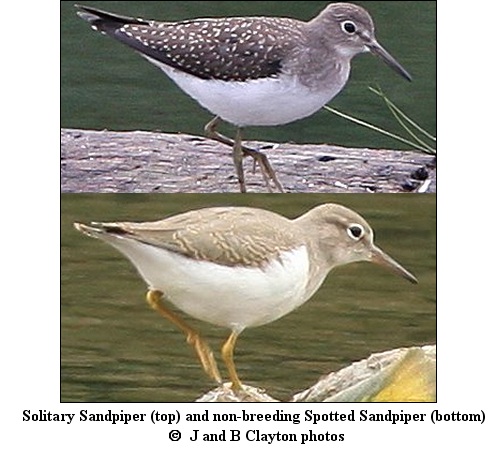
Non-breeding plumaged Spotted Sandpipers can be mistaken for Solitary Sandpiper. Note the Spotted Sandpiper’s slightly smaller size and shorter neck, shorter legs and a long tail that extends past the wing tips on perched birds. In flight, Spotted Sandpiper’s wings have white stripes while Solitary Sandpipers have dark wings. Both species of yellowlegs, while also similar, are larger with longer, yellow legs. Be aware of dirty/muddy legs on a yellowlegs which can make the legs look more green.
Best Viewing Sites:
Cheam Lake Wetlands in Popkum is a reliable area to see Solitary Sandpipers especially in early to mid August.
Sources:
Ehrlich, Dobkin and Wheye, (1988)
Noteworthy Data
Date | Location | Source(s) | Comments |
| 10-Sept-2009 | Tuyttens Road, Agassiz | K. R. Jones | One. Latest fall record. |
| 31-July-2009 | Cheam Lake Wetlands, Popkum | C. McDonald | Six birds. Most seen at one time. |
| 06-May-2009 | Chapman Road, Chilliwack | J. Osterhold | Spring migrant. |
| 30-July-2008 | Great Blue Heron Nature Reserve, Chilliwack | B & J Clayton | One. Earliest fall record. |
Photos