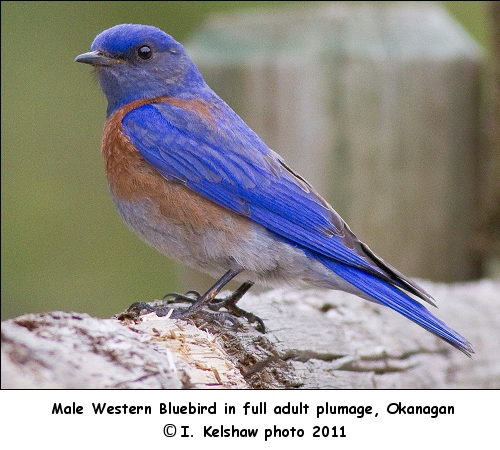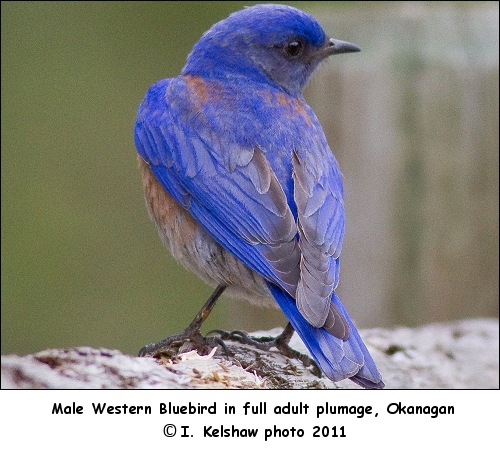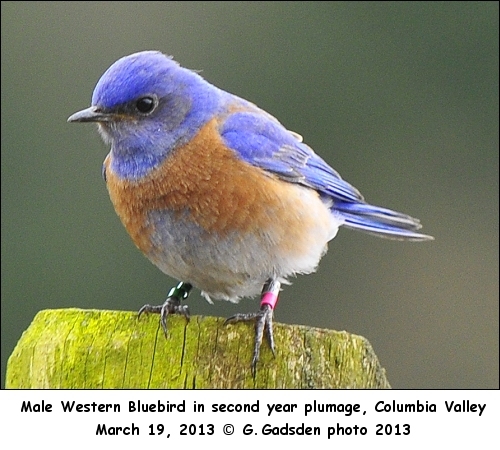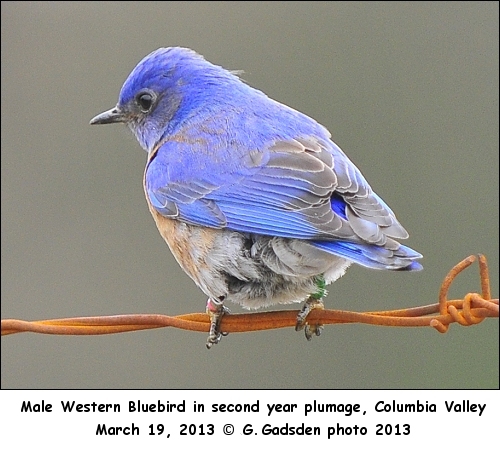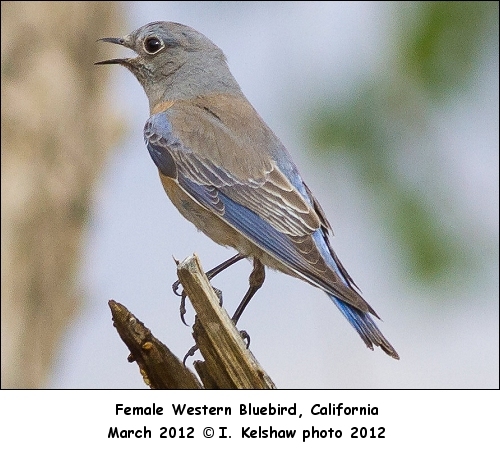

A population of Western Bluebird historically bred in the checklist area probably until about the 1960’s but this population is now extripated. Gerry Oak ecosystems are closely tied to this population and the loss of this ecosystem combined with the introduction of invasive species such as House Sparrow and European Starling are major contributing factors to this extripation (GOERT 2010). Western Bluebirds continue to breed elsewhere in the province with most of this breeding activity occuring in the Interior. Encounters with this species now in our checklist area are most likely strays on migration to their breeding grounds in the Interior however reintroduction efforts on Vancouver Island have had some success (GOERT 2012) and possibly some of these birds may wander to the mainland. Most records to date have occured between middle March and early April.
Feeds mostly on insects and berries. Usually found on low perches in open areas such as on fence posts where it often flies to the ground to catch insects and spiders before returning to its perch. This species is a cavity nester but will also take to nest boxes. Migratory, spends the winter in the southern States and into Mexico. It is cited that in mild winters they sometimes will winter in B.C. (GOERT 2010)
Similar species:
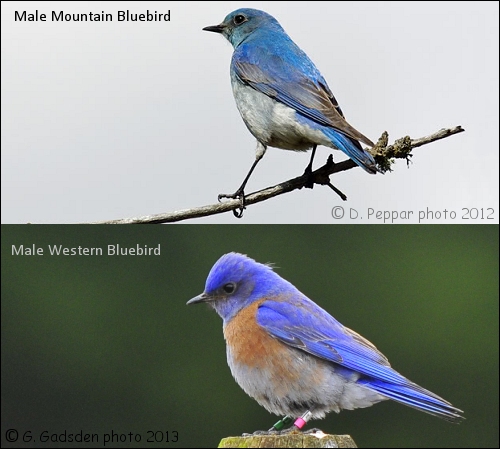
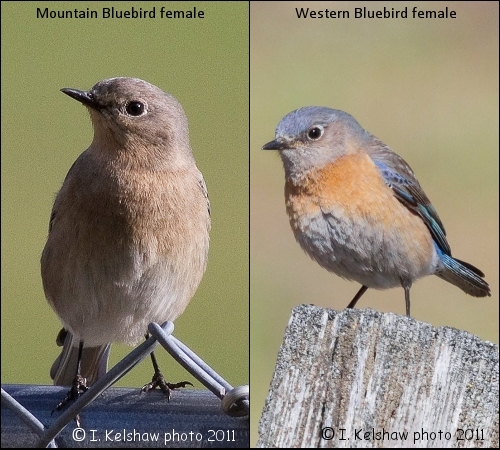
Mountain Bluebird males lack any red on the breast and are easily identified. Bright female Mountain Bluebirds can pose a bit of a challenge but note difference in body structure and bill size.
Male Lazuli Buntings are superficially similar to male Western Bluebirds but they are smaller, have white wingbars and a finch-like bill.
Sources:
Ehrlich, Dobkin and Wheye, (1988)
Gerry Oak Ecosystem Recovery Team
Sibley, D. (2000)
Noteworthy Data
Date | Location | Source(s) | Comments |
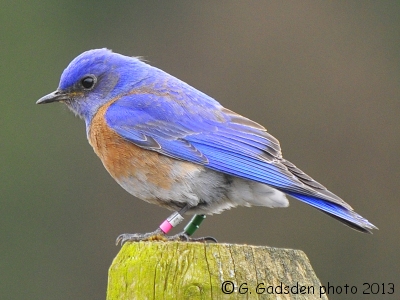
| March 19, 2013 | Columbia Valley | G. Gadsden 2013d | Male with colour bands. Where the bird was banded has not been discovered as yet. |
| March 30, 2009 | Hope Airport | M. Brown 2009c | Four males and two females discovered by Murray Brown. |
| March 19, 2008 | Cutler Rd., Agassiz | K.R. Jones 2008b | A lone male. |
| April 1, 1972 | Cheam Lake Wetlands | M. Roop | Record shared with D. Knopp. |
Photos